
Notes on board advisory, business-first legal thinking, and the questions we see companies wrestle with most often.

The recent joint launch of the "Demat 2.0" pilot by the Securities and Exchange Board of India (SEBI) and the Reserve Bank of India (RBI) represents a structural shift in India's market infrastructure. By moving the issuance, holding, and settlement of corporate bonds to a private, permissioned Distributed Ledger Technology (DLT) network, the regulators have moved tokenised assets from concept into a live, running pilot.
Read article →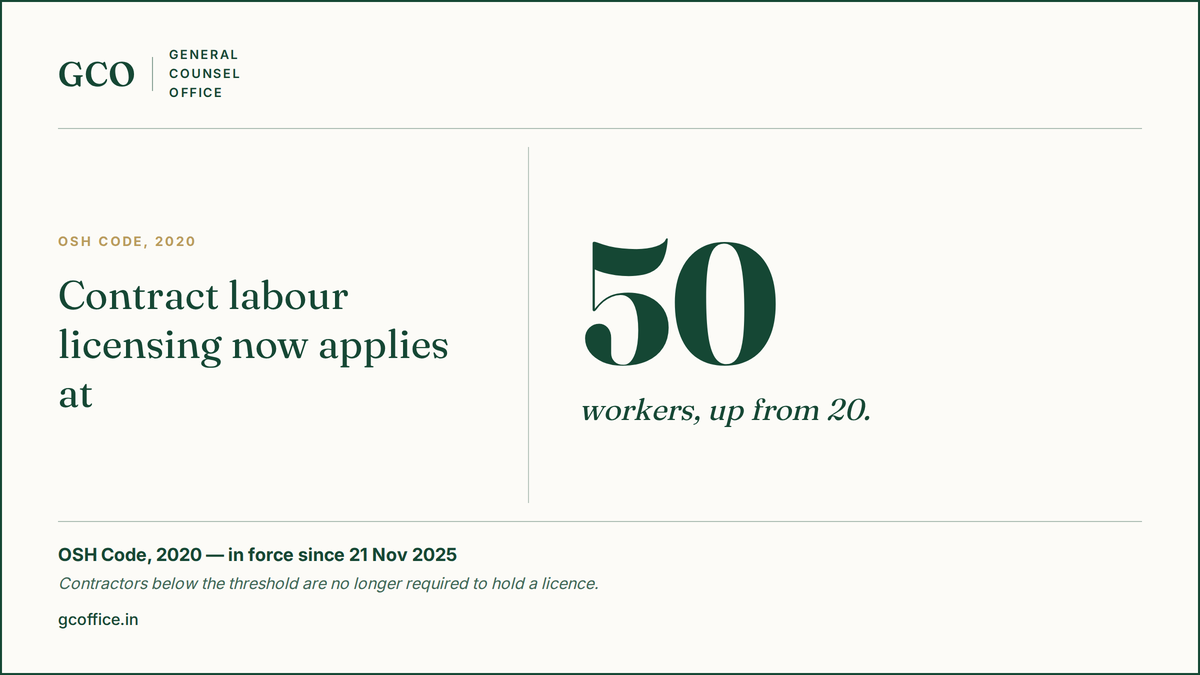
The Occupational Safety, Health and Working Conditions Code, 2020 (OSH Code) brings multiple workplace laws within one framework. Its practical reach is broad: registrations, working hours, welfare facilities, women working at night, contractor arrangements and safety responsibility all require attention.
Read article →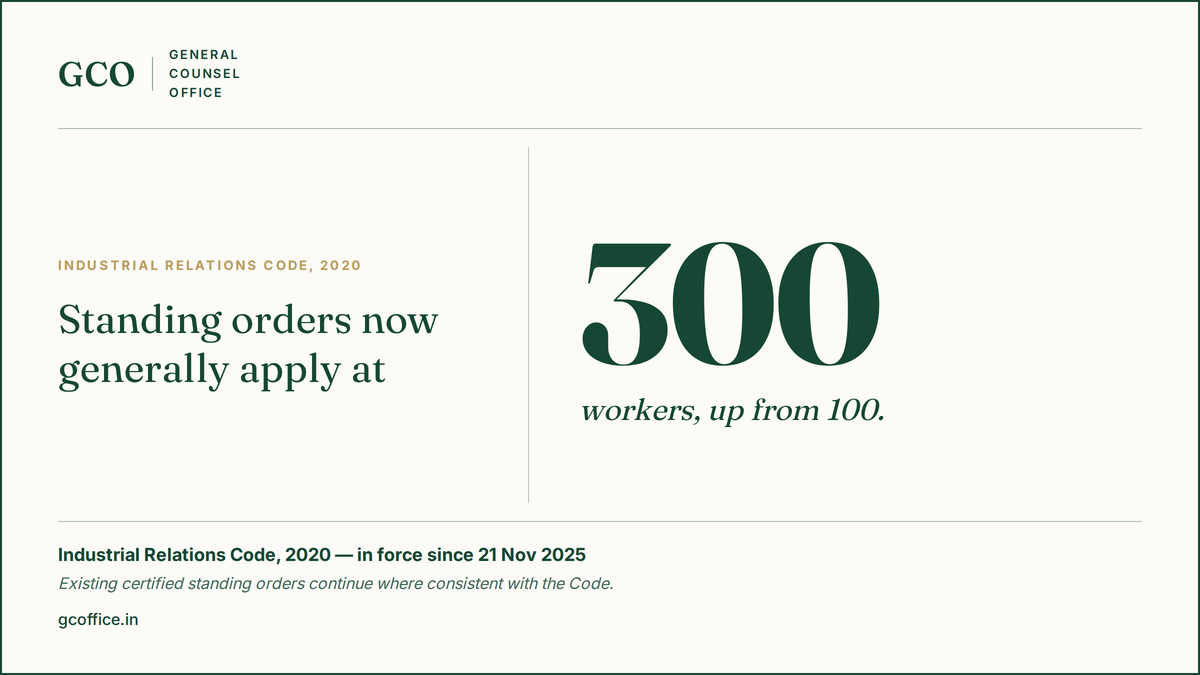
The Industrial Relations Code, 2020 (IR Code) consolidates the law governing industrial disputes, trade unions and standing orders. For employers, its importance lies not only in revised thresholds, but also in the procedures supporting workforce restructuring, disciplinary administration and collective engagement.
Read article →Why we're writing here, and what to expect: practical, board-level thinking on the legal questions growing companies actually face.
Read article →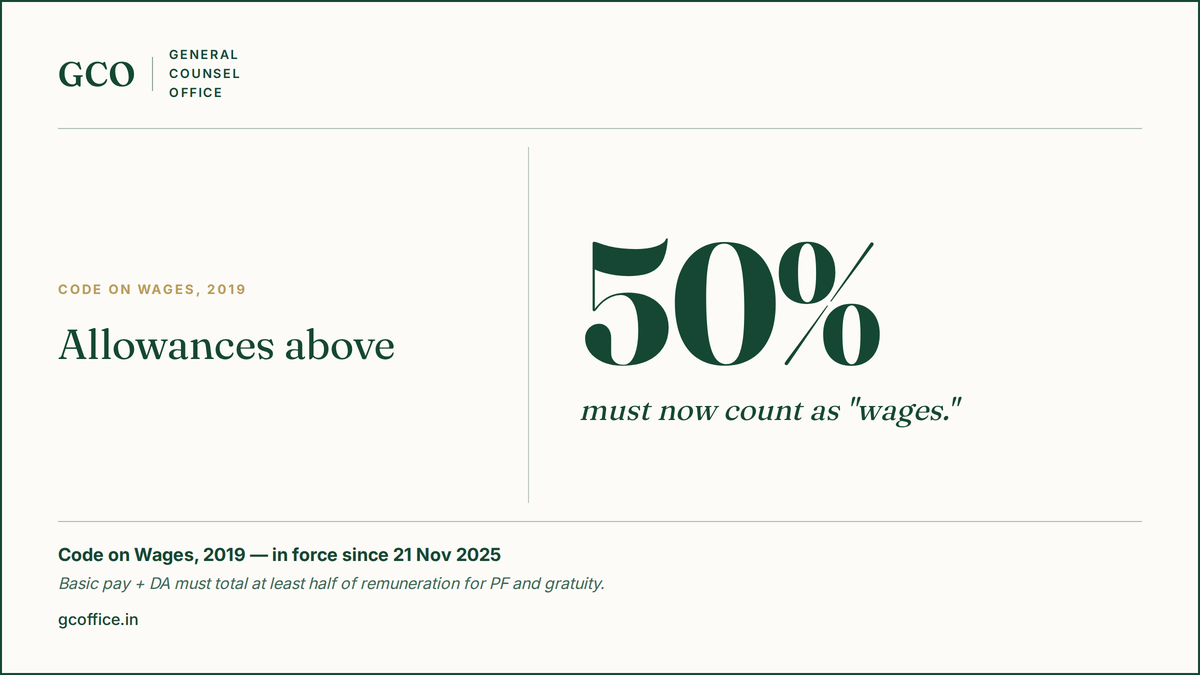
India’s four Labour Codes have replaced 29 central labour statutes with a common framework for wages, industrial relations, occupational safety and social security. In this four-part series, we examine what each Code changes for employers in practice. We begin with the Code on Wages, 2019 (Wage Code), whose impact extends well beyond monthly payroll.
Read article →